Highlights
Selected projects developed by my research team.
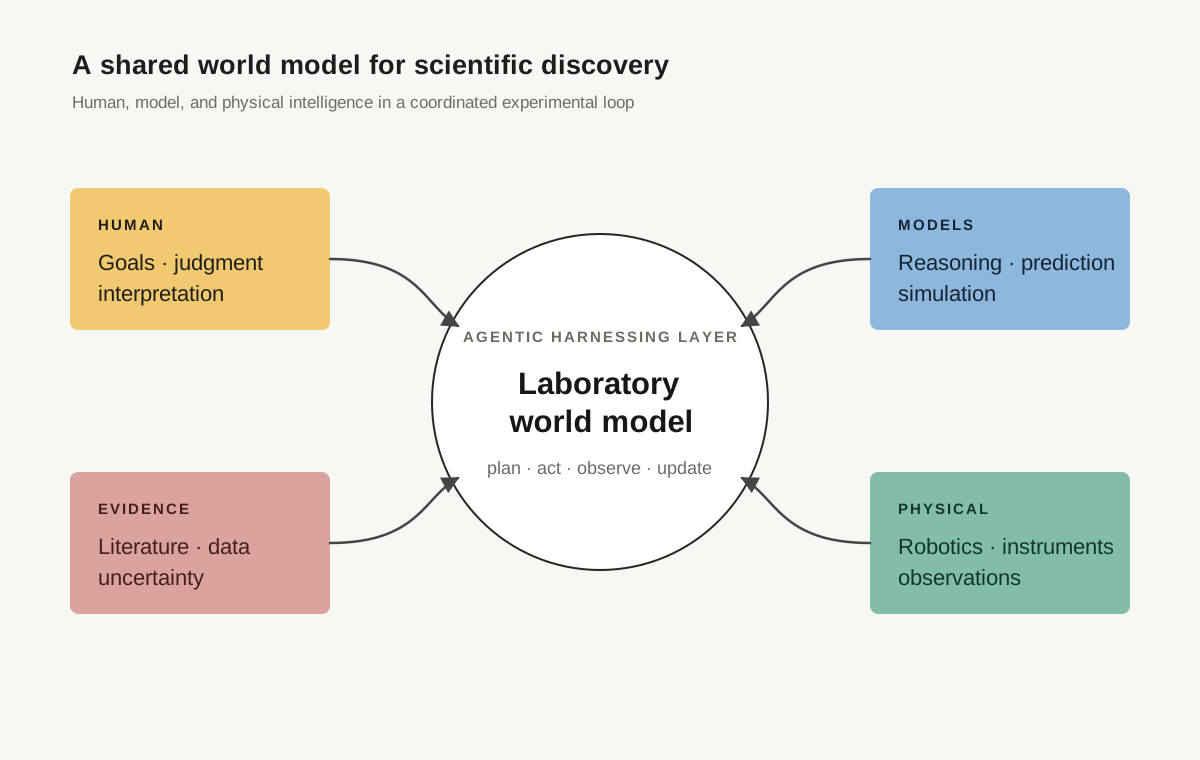
Agentic Laboratories of the Future
A proposed architecture for scientific discovery organized around laboratory world models that coordinate human judgment, AI reasoning, experimental evidence, and physical execution.
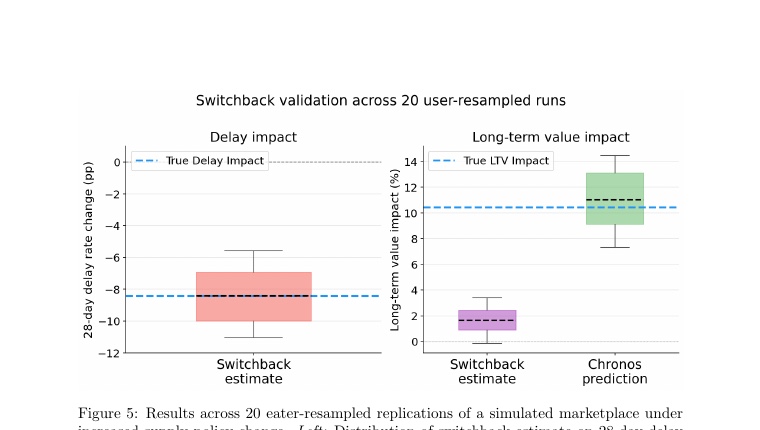
What Is the Long-Term Value of Reliability?
Chronos LTV combines sequential causal inference with a Markov decision process to measure how service delays and defects affect customer behavior and business outcomes over time.

Uber Consumer AI
A consumer AI agent that turns grocery lists, recipes, and photos into checkout-ready carts using multimodal understanding, real-time availability and pricing, and customers’ past orders.
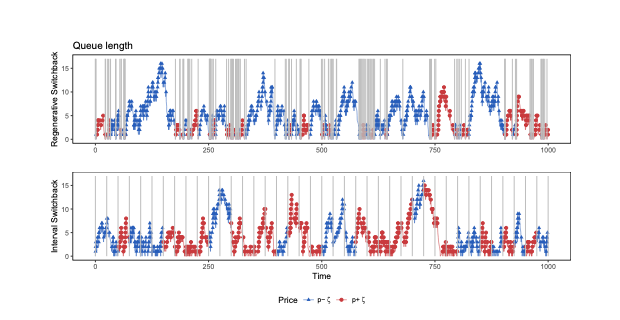
Experimenting under Stochastic Congestion
Queueing-aware estimators address interference among waiting customers, improving switchback experiments and recovering system-wide policy effects from unit-level randomization.
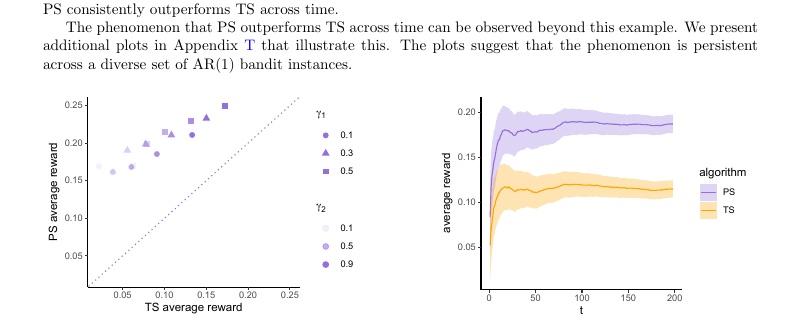
Non-Stationary Bandit Learning via Predictive Sampling
Predictive sampling favors information that will remain useful as an environment changes, with regret guarantees and stronger performance than Thompson sampling across studied non-stationary settings.
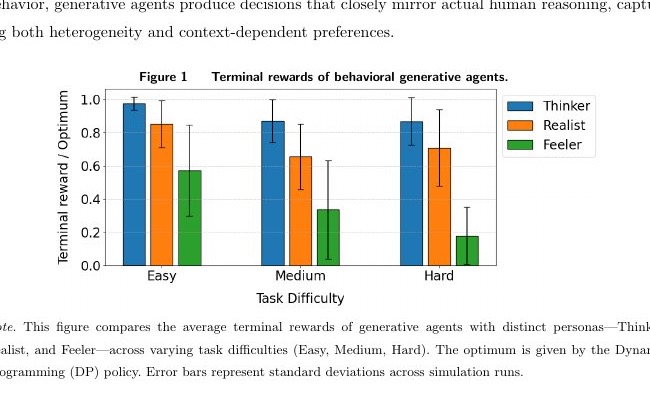
Behavioral Generative Agents for Energy Operations
Generative agents simulate sequential customer decisions under changing electricity prices and outage risks, revealing heterogeneous preferences and behavior during rare, high-impact events.
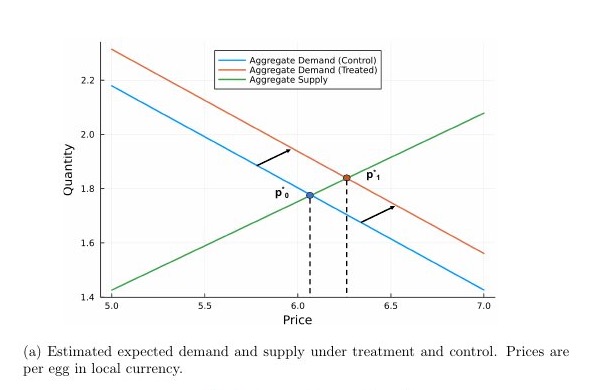
Treatment Effects in Market Equilibrium
A framework for estimating direct effects, spillovers, and welfare-improving targeting from unit-level experiments conducted within a single large marketplace.
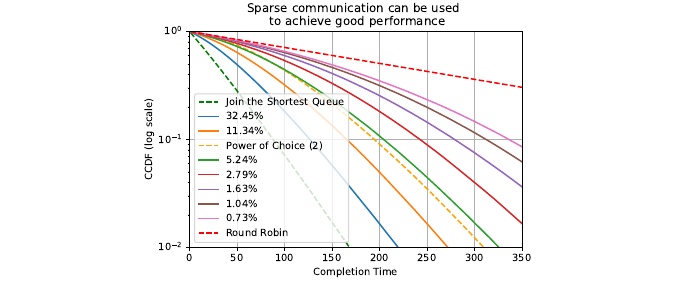
Load Balancing Using Sparse Communication
State approximation enables asymptotically optimal routing with little communication, matching or improving leading load-balancing methods while reducing communication rates by as much as 90 percent.
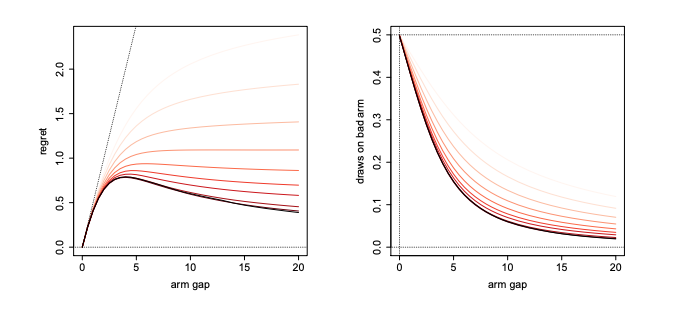
Weak Signal Asymptotics for Sequentially Randomized Experiments
A diffusion-limit analysis provides instance-specific views of regret and belief evolution, exposing a tradeoff between near-optimal Thompson sampling and unstable posterior beliefs.
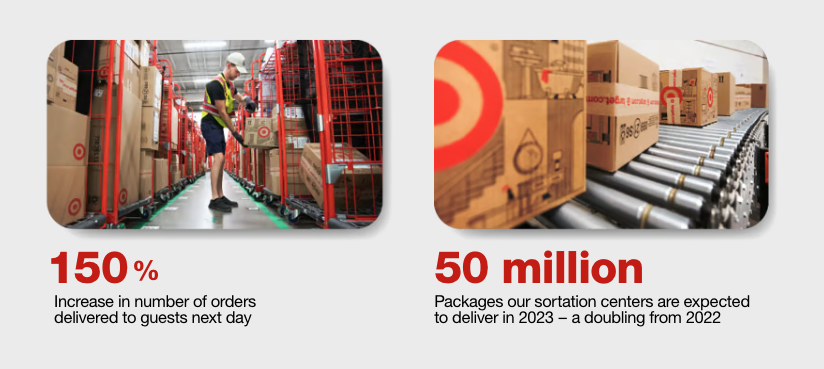
Target’s Last-Mile Delivery System
The core batching and routing algorithm, designed by Professor Xu, helps power Target’s sortation-center network for faster local delivery, lower costs, and greater last-mile capacity.
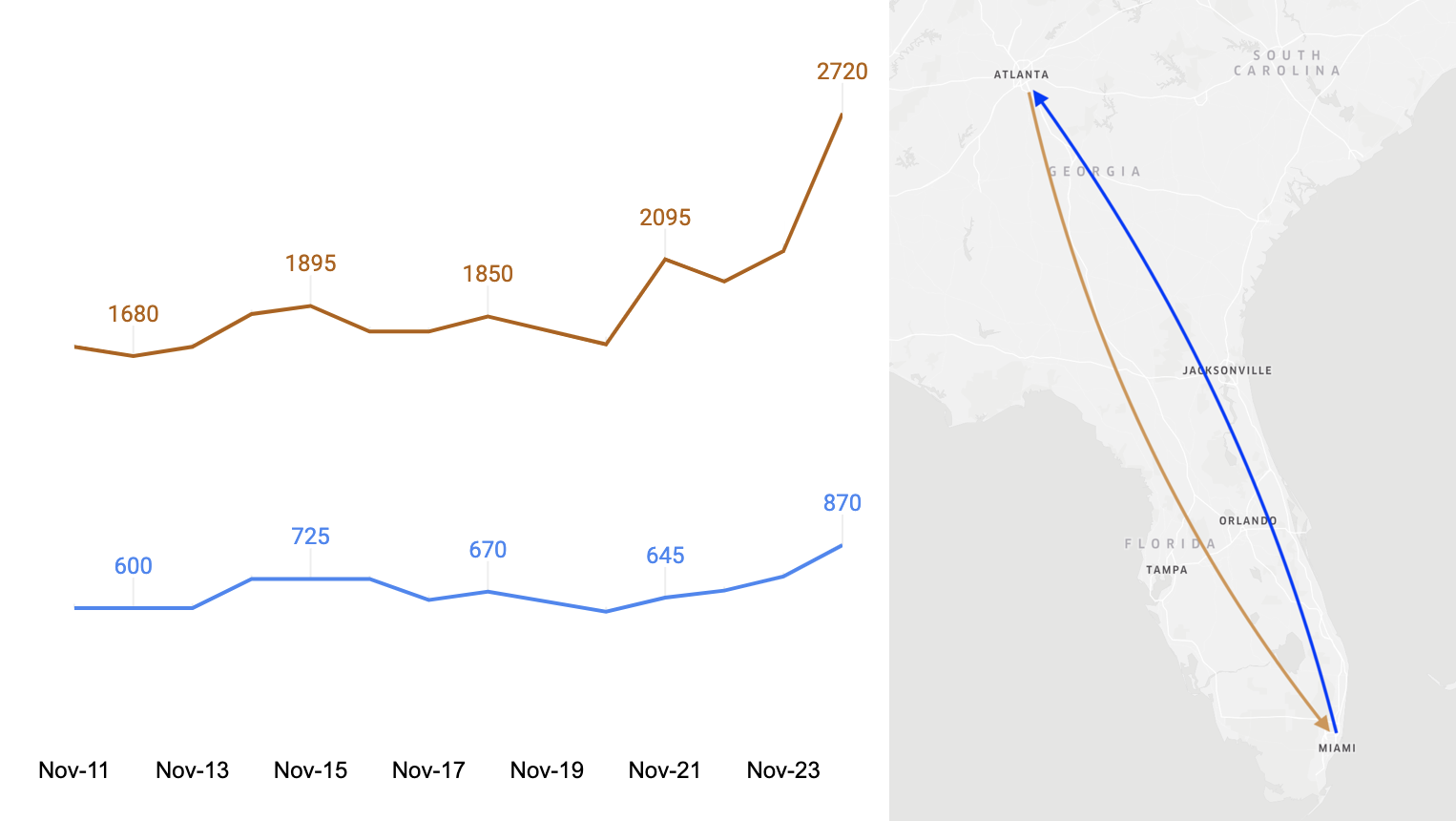
Freight Pricing with a Controlled Markov Decision Process
A dynamic pricing system computes sequences of upfront prices for tens of thousands of freight loads each day, balancing booking speed, operating costs, and service reliability.
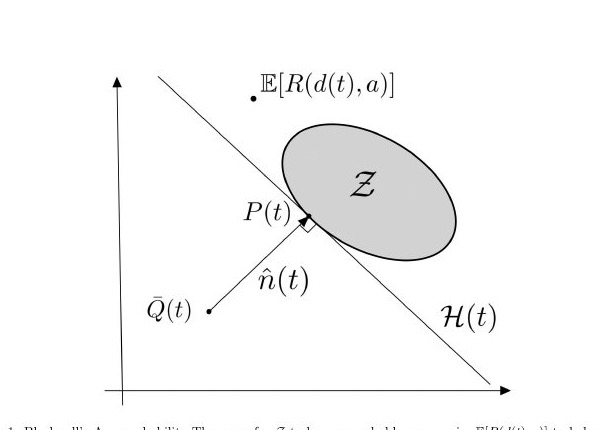
Learning and Information in Stochastic Networks and Queues
A unified account of how supervised learning, bandits, reinforcement learning, and information shape the stability and optimization of queueing networks.
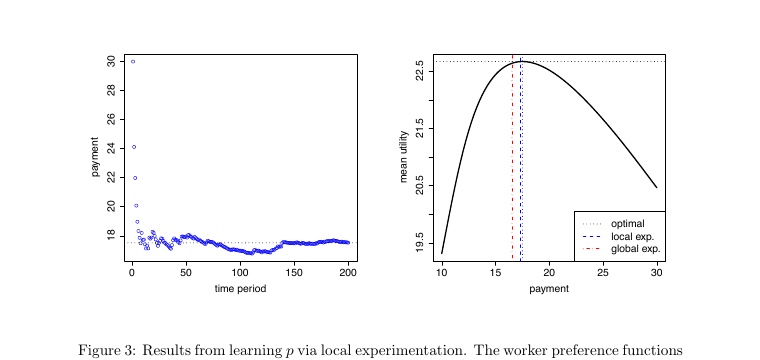
Experimenting in Equilibrium
Mean-field modeling and small randomized perturbations make it possible to estimate policy gradients and optimize large marketplaces without moving the system far from equilibrium.
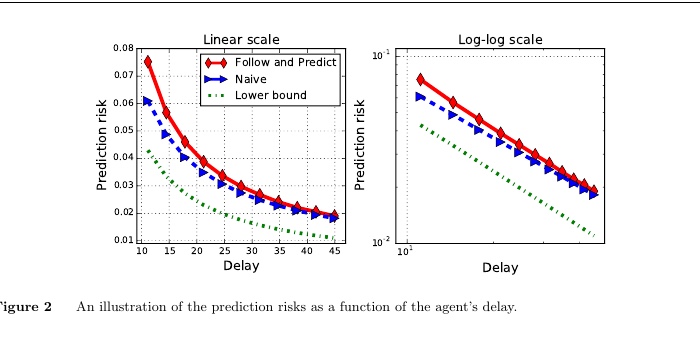
Delay-Predictability Tradeoffs in Reaching a Secret Goal
The Goal Prediction game quantifies privacy under surveillance: an agent can reduce an adversary’s prediction accuracy only in inverse proportion to the time spent reaching the goal.
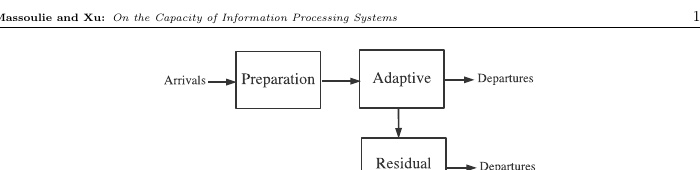
On the Capacity of Information Processing Systems
An adaptive inspection policy uses noisy expert judgments to recover hidden labels accurately while asymptotically minimizing the number of experts needed to keep the system stable.
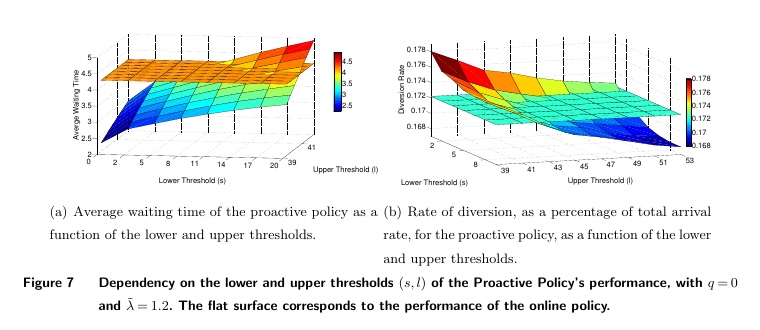
Using Future Information to Reduce Emergency Department Waiting Times
Proactive diversion policies act on predicted arrivals before congestion peaks, remaining effective with noisy forecasts and reducing simulated delays by as much as 15 percent.
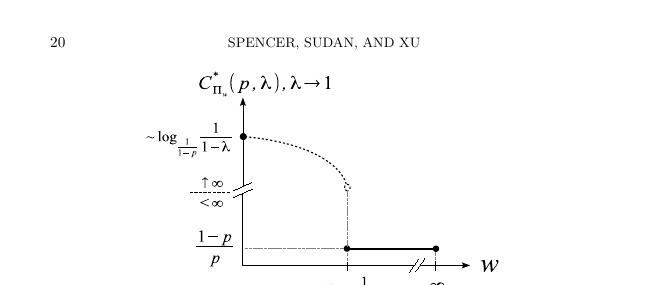
Queueing with Future Information
A finite lookahead window can keep delays bounded in heavy traffic, whereas queues without future information grow without bound as demand approaches capacity.
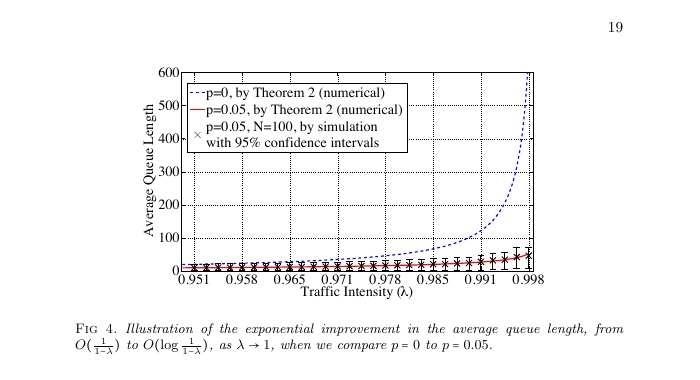
On the Power of (Even a Little) Resource Pooling
Even a small centrally pooled share of server capacity changes heavy-traffic queue growth from linear to logarithmic, producing an exponential improvement in delay.